When used correctly, both copper and Tralopyril can be excellent solutions for the fish farming industry.
In the risk report for Norwegian fish farming, recently published by the Institute of Marine Research, the researchers point to animal welfare as the most important challenge for sustainable aquaculture. In this context, the continued use of antifouling still plays an important role. Net cleaning in the sea has been linked to poor gill health, ulcers, and the spread of infectious diseases. To achieve the goals of reduced mortality, the aquaculture industry is therefore dependent on systems to prevent harmful fouling.

The report from the Institute of Marine Research shows that there has been an increase in the use of copper-based net impregnation. This is likely accurate; we have also noticed a shift in demand in favor of copper-based products instead of Tralopyril.
We are not surprised by the decline in demand for Tralopyril. Over the past year, there have been several speculative media reports that have created significant uncertainty about whether such products are safe to use. The industry must be able to trust the environmental authorities in this regard. Some of the country’s leading experts on active substances work in the Norwegian Environment Agency’s chemicals section. They support the use of approved impregnation products, both those containing Tralopyril and copper. They also have access to all available research and data on these substances and devote substantial resources to risk assessments. We must therefore be able to trust that these products are safe when used as intended.
It is positive that the Institute of Marine Research has downgraded the risk of impacts on seabed conditions in certain areas. However, when it comes to net impregnation, we are still dependent on it being used as intended and on preventing emissions to the environment. The majority of impregnation products on the market are not designed to withstand high-pressure washing. When this nonetheless occurs, the coating detaches from the net and the active substances appear in sediment samples. This can be avoided: by using a net replacement strategy—meaning replacing the net when it becomes fouled—the net is brought ashore with the coating system still intact. It can then be washed safely on land without any environmental discharge.
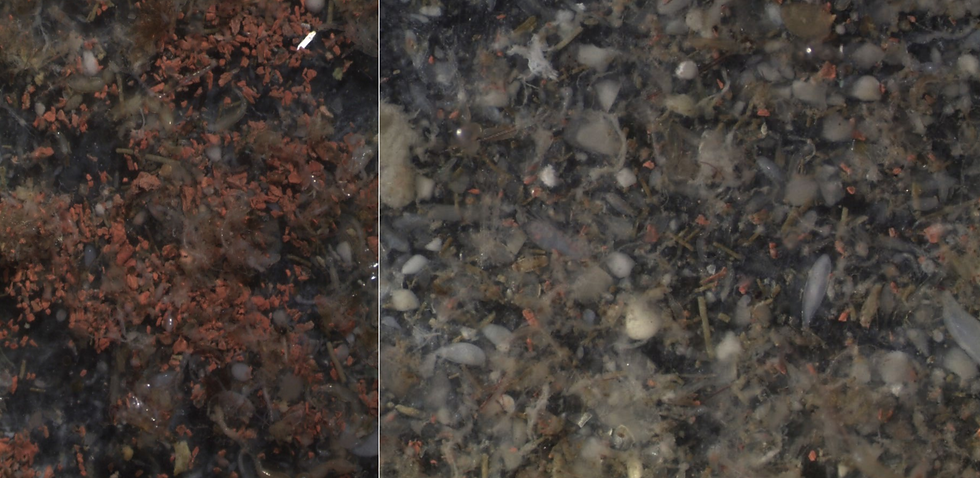
At Steen-Hansen, we have strong confidence in the use of biodegradable products. When both the binders and the active substances break down naturally in the sea, we achieve a more robust solution and avoid the risk of long-term environmental damage. Tralopyril has some unique properties in this respect, as the natural leaching of the active substance breaks down in seawater within a few hours. When this is combined with a net replacement strategy instead of high-pressure washing, we also avoid the challenges related to microplastic emissions. That said, the industry depends on having access to the full toolbox to ensure effective and predictable systems that protect against fouling. When used correctly, both copper and Tralopyril can be good, environmentally friendly solutions in this regard.
To succeed with net replacement, it is particularly important to have predictable protection systems. In this context, a combination of Tralopyril together with reduced amounts of copper may be the best option.
At the FHF dialogue meeting, “Best Strategy for Choosing Nets,” held last autumn, the environmental foundation Bellona presented its analysis of sustainable anti-fouling measures. Environmental sustainability was given significant weight, but economic, social, and climate factors were also included in what is referred to as a multi-criteria sustainability analysis. In this assessment, solutions based on organic active substances, such as Tralopyril, used without in-sea net cleaning, scored the highest, while net cleaning and certain plastic materials did not achieve equally high scores. This demonstrates the need to focus on the bigger picture. We must avoid exposing fish to unnecessary stress and infection risk from frequent net cleaning, reduce emissions of CO₂, microplastics, and biocides, and prevent the spread of invasive species. It is complex, and it is difficult to make choices that have no downsides.
All in all, however, the risk report from the Institute of Marine Research indicates that the industry is moving in the right direction, with increased production, reduced mortality, and still a limited environmental footprint.


Comments