top of page

Posts List

In the risk report for Norwegian fish farming, recently published by the Institute of Marine Research, the researchers point to animal welfare as the most important challenge for sustainable aquaculture. In this context, the continued use of antifouling still plays an important role. Net cleaning in the sea has been linked to poor gill health, ulcers, and the spread of infectious diseases. To achieve the goals of reduced mortality, the aquaculture industry is therefore dependent on systems to prevent harmful fouling. Net impregnation is widely used to prevent fouling on the nets. These treatments contain active substances and must be used in a way that does not cause pollution near aquaculture facilities. The report from the Institute of Marine Research shows that there has been an increase in the use of copper-based net impregnation. This is likely accurate; we have also noticed a shift in demand in favor of copper-based products instead of Tralopyril. We are not surprised by the decline in demand for Tralopyril. Over the past year, there have been several speculative media reports that have created significant uncertainty about whether such products are safe to use. The industry must be able to trust the environmental authorities  in this regard. Some of the country’s leading experts on active substances work in the Norwegian Environment Agency’s chemicals section. They support the use of approved impregnation products, both those containing Tralopyril and copper. They also have access to all available research and data on these substances and devote substantial resources to risk assessments. We must therefore be able to trust that these products are safe when used as intended. It is positive that the Institute of Marine Research has downgraded the risk of impacts on seabed conditions in certain areas.  However, when it comes to net impregnation, we are still dependent on it being used as intended and on preventing emissions to the environment. The majority of impregnation products on the market are not designed to withstand high-pressure washing. When this nonetheless occurs, the coating detaches from the net and the active substances appear in sediment samples. This can be avoided: by using a net replacement strategy—meaning replacing the net when it becomes fouled—the net is brought ashore with the coating system still intact. It can then be washed safely on land without any environmental discharge. Photo: Trond Einar Isaksen / NORCE, showing how discharges occur when nets are cleaned in the sea. The red clumps are paint residues collected with a hand net inside the cage while high-pressure washing of the net was taking place. This is the type of pollution we must avoid if net impregnation is to be used in a sustainable manner. At Steen-Hansen, we have strong confidence in the use of biodegradable products. When both the binders and the active substances break down naturally in the sea, we achieve a more robust solution and avoid the risk of long-term environmental damage. Tralopyril has some unique properties in this respect, as the natural leaching of the active substance breaks down in seawater within a few hours. When this is combined with a net replacement strategy instead of high-pressure washing, we also avoid the challenges related to microplastic emissions. That said, the industry depends on having access to the full toolbox to ensure effective and predictable systems that protect against fouling. When used correctly, both copper and Tralopyril can be good, environmentally friendly solutions in this regard. To succeed with net replacement, it is particularly important to have predictable protection systems. In this context, a combination of Tralopyril together with reduced amounts of copper may be the best option. At the FHF dialogue meeting, “Best Strategy for Choosing Nets,” held last autumn, the environmental foundation Bellona presented its analysis of sustainable anti-fouling measures.  Environmental sustainability was given significant weight, but economic, social, and climate factors were also included in what is referred to as a multi-criteria sustainability analysis. In this assessment, solutions based on organic active substances, such as Tralopyril, used without in-sea net cleaning, scored the highest, while net cleaning and certain plastic materials did not achieve equally high scores. This demonstrates the need to focus on the bigger picture. We must avoid exposing fish to unnecessary stress and infection risk from frequent net cleaning, reduce emissions of CO₂, microplastics, and biocides, and prevent the spread of invasive species. It is complex, and it is difficult to make choices that have no downsides. All in all, however, the risk report from the Institute of Marine Research indicates that the industry is moving in the right direction, with increased production, reduced mortality, and still a limited environmental footprint.

When used correctly, both copper and Tralopyril can be excellent solutions for the fish farming industry.

In the risk report for Norwegian fish farming, recently published by the Institute of Marine Research, the researchers point to animal welfare as the most important challenge for sustainable aquaculture. In this context, the continued use of antifouling still plays an important role. Net cleaning in the sea has been linked to poor gill health, ulcers, and the spread of infectious diseases. To achieve the goals of reduced mortality, the aquaculture industry is therefore dependent on systems to...

Read More
Steen-Hansen is strengthening its commitment to innovative solutions for aquaculture and other marine industries. Marcus Bentzen has now taken up the position of Global R&D Manager at the company and will have overall responsibility for the continued development of future-oriented products and technologies for a more sustainable aquaculture industry. Marcus Bentzen, New Global R&D Manager in Steen-Hansen The appointment is an important part of Steen-Hansen’s long-term strategy to remain at the forefront of research and development, with particular focus on fish welfare, environmental impact, and increased profitability for customers. At 31 years of age, Marcus will have to accept being described as “young and promising” in a company with more than 90 years of tradition. However, he has already built a strong professional background in materials science and chemistry, and most recently comes from a PhD position at the Norwegian University of Science and Technology (NTNU). There, he conducted research on functional materials in demanding environments, including interfaces between solid materials and liquids, long-term stability, and the relationship between material structure and performance. He also has extensive experience in laboratory work, material characterization and modeling, as well as teaching at university level. “We are very proud to have Marcus join our team. He brings solid expertise, high energy, and many good ideas. The aquaculture industry faces complex challenges, and innovation is absolutely crucial to finding solutions that safeguard the environment, fish welfare, and economic sustainability, ” says CEO of Steen-Hansen Group, Ulrik Ulriksen. Marcus is also excited about contributing to the further development for one of Norway’s most important industries. “I am very much looking forward to taking on the role of Global R&D Manager at Steen-Hansen. Seafood is Norway’s most important export industry, and it is both exciting and meaningful to work on developing solutions that can contribute to a more sustainable and competitive aquaculture industry – both in Norway and internationally,”  says Marcus. With the appointment of Marcus, Steen-Hansen strengthens its ambition to lead the development of modern antifouling and protective coatings, affirming their goal of reducing environmental footprints of the global aquaculture industry.

New Head of Development

Steen-Hansen is strengthening its commitment to innovative solutions for aquaculture and other marine industries. Marcus Bentzen has now taken up the position of Global R&D Manager at the company and will have overall responsibility for the continued development of future-oriented products and technologies for a more sustainable aquaculture industry. Marcus Bentzen, New Global R&D Manager in Steen-Hansen The appointment is an important part of Steen-Hansen’s long-term strategy to remain at...

Read More
What does it mean, "a holistic approach to pollution?" Microplastics, biocides, invasive species, infectious agents, Co2.. They all matter when looking at emissions from #aquaculture  nets. The choice of net material and coating is important, but even more so is the way we use them. And we need a plan for life cycle management of all equipment used at sea. Debating #microplastic  emissions at the annual NAMC conference in Bergen,  leading scientists, industries and other stakeholders gathered to learn and collaborate. As a producer of #paint  and a supplier to the #aquaculture  industry this topic is of special interest to Steen-Hansen. For us, product stewardship means to care about design, responsible use and the entire product life cycle. A big thanks to #NORCE Research and  #NAMC , North Atlantic Microplastic Centre for giving the stage to these important topics. #WWF #Bellona #Pinovo #REV_Ocean

Holistic approach to pollution

What does it mean, "a holistic approach to pollution?" Microplastics, biocides, invasive species, infectious agents, Co2.. They all matter when looking at emissions from #aquaculture  nets. The choice of net material and coating is important, but even more so is the way we use them. And we need a plan for life cycle management of all equipment used at sea. Debating #microplastic  emissions at the annual NAMC conference in Bergen, leading scientists, industries and other stakeholders gathered...

Read More
Experts from Jotun speak about the use of biocides in the marine coatings market.  Photo: Jotun The prevention of biofouling is a hot topic in our industry generally and for regulators in particular. Biocidal antifouling coatings containing active substances that control the growth of unwanted organisms can and do make a huge contribution to combatting the global issue, but the biocides themselves are under scrutiny even though the industry still consider biocides as a key contributor to sustainable operations. 
 In a recent publication by Jotun their experts talk about the importance of effective systems to manage biofouling, and the available biocides in our tool box. Although focused on shipping, many of the same perspectives can be said to be relevant also in Aquaculture. You can read the full article from Jotun here

Biocides – A Necessary Tool for Managing Biofouling

Experts from Jotun speak about the use of biocides in the marine coatings market. Photo: Jotun The prevention of biofouling is a hot topic in our industry generally and for regulators in particular. Biocidal antifouling coatings containing active substances that control the growth of unwanted organisms can and do make a huge contribution to combatting the global issue, but the biocides themselves are under scrutiny even though the industry still consider biocides as a key contributor to...

Read More
As the first producer in Europe, Steen-Hansen has introduced an Environmental Product Declaration (EPD) for impregnation products for aquaculture nets. This marks a valuable step towards more climate-friendly seafood production. “It is very important that we have good knowledge of our own environmental impact. At the same time, as an industry, we must take care of the natural advantages we have for fish farming, with access to clean, cold, and oxygen-rich water. This can give us food with the lowest possible climate footprint,”  says Ulrik Ulriksen, CEO of Steen-Hansen AS, in a statement. What is an EPD? An Environmental Product Declaration (EPD) is a standardized and third-party verified declaration that provides quantified information about a product’s climate and environmental impact throughout its entire life cycle – from raw material extraction to finished product. For aquaculture, this means getting concrete data on how input factors affect the total climate footprint of the fish. As  more and more inputs in farming receive their own EPDs, the climate accounting becomes more precise. This makes it easier for farmers to identify which measures have the greatest effect on reducing the climate footprint. In the long run, it will be required that all products have such an environmental declaration. You can learn more about EPDs in this short video Farmed fish – Climate winners in the fresh food counter Farmed salmon and trout are already among the most climate-friendly animal proteins in the world. According to international analyses, the production of one kilo of edible product emits approximately: • Beef: ~27 kg CO₂ equivalents • Pork: ~6 kg CO₂ equivalents •Chicken: ~4 kg CO₂ equivalents • Farmed salmon/trout: ~3 kg CO₂ equivalents This shows that modern aquaculture, which takes place in naturally oxygen-rich waters, has a very low climate footprint compared to many other protein sources. Climate Gains with smarter net strategies Impregnation products help extend the lifetime of nets and reduce the need for net washing. Such calls by cleaning vessels can pose a biosecurity risk for fish and leads to emissions into the environment. Fewer boat visits and reduced diesel consumption mean lower emissions and lower costs for the farmer, important contributions to making the aquaculture industry even more sustainable. The Norwegian NGO Bellona  recently presented its sustainability analysis for net strategies in aquaculture. Together with the University in Trondheim, NTNU, they have looked at bigger pictures, where economic and social sustainability also count in addition to the environmental perspective. Such an MCDA (Multi-Criteria Decision Analysis) can be a very useful tool when the industry is making investments and choosing the right solutions for the future, as it evaluates many criteria that are often conflicting. As more inputs receive environmental declarations, the precision and availability of such sustainability analyses will improve even further. Bellona’s calculations showed significant differences depending on which impregnation type or cleaning regime is chosen to keep the net clean, and that the differences become greater when environmental sustainability is given more weight. You can read more about the MCDA analysis here: Sustainability analysis of antifouling methods An important development for the industry “Being the first to introduce such environmental declarations for antifouling has meant a lot of pioneering work for us. Fortunately, we have both internal environmental expertise, and we have received support and help from EPD Norway to develop good and reliable tools. This is a small step in the right direction that the industry needs to show that seafood production is not only climate-friendly today but is continuously improving for the future,”  says Ulriksen. With EPDs in place, Steen-Hansen contributes to the new standard in Europe for transparency and environmental impact. As inputs in aquaculture are gradually documented, it strengthens the message and credibility of aquaculture as an environmentally friendly food choice. It provides both farmers and consumers with confidence that development is moving in the right direction. You can find EPD for Steen-Hansen products here

Industry first environmental declaration for net impregnation

As the first producer in Europe, Steen-Hansen has introduced an Environmental Product Declaration (EPD) for impregnation products for...

Read More
Together with Stim and sponsored by Janssen PMP we will be hosting an open boat for our clients and contacts on Tuesday, August 19th and Wednesday, August 20th, from 12 noon until late.  Refreshments will be available throughout the day, and something to eat will also be available later in the evening. Note! We will recommend to be as early as possible, when the Captain says that enough is enough, it probably will be enough... You'll find us on Fosenkaia, near Trondheim Central Station. We offer opportunities to sing together, but as always, it's up to you to sing...  You can also find us at AquaNor at booth D-333 in Hall D.

Steen-Hansen invites you to MS Loyal at AquaNor 2025

Together with Stim and sponsored by Janssen PMP we will be hosting an open boat for our clients and contacts on Tuesday, August 19th and...

Read More
Recently, the Institute of Marine Research (IMR) made headlines in the national media, warning about environmental toxins in salmon. It was quite alarming to read that a new toxic substance from net impregnation had been found in the fish. The case was picked up by several media outlets and posted on HI's own website. What is not mentioned in this article is that the study was funded by Norway’s largest supplier of copper antifouling, which in turn is supported by Europe’s largest producer of cuprous oxide. In other words, a competitor to the substance in question. The Institute of Marine Research is tasked with solving some very important societal missions, which form the basis for public administration in Norway, such as contributions to the Aquaculture traffic light system. It is therefore crucial that their integrity and trustworthiness are never in doubt. Their research must be impartial, and an institution like this must be particularly careful that any comments or statements they make in the public sphere are not speculative or sensationalized. Let me say a bit more about this specific study, which formed the basis for the article about environmental toxins. I am not in a position to comment on the execution of the experiment. Some fish swam in tanks with impregnated nets. After some time, IMR measured small amounts of the active substance in the fish fillet. I have nothing to criticize about the main conclusion of the experiment, which simply confirms what was already demonstrated in 2017: that fish swimming near impregnated nets absorb trace amounts of the active substances. This was risk-assessed by the Norwegian Environment Agency, which concluded: " ... a child weighing 15 kg would have to consume 973 kg and an adult 3891 kg of fish per day to exceed the limit. Therefore, no risk to consumers is expected from consuming fish contaminated with Tralopyril. " IMR reports that they measured concentrations of approximately 0.3 nanograms per gram, which is less than half of what the Environment Agency based its assessment on. IMR presents this as alarming news without putting the values in context or discussing whether they pose any risk. The IMR researcher claims that the conditions for approving the active substance are not met. However, the case has already been mapped out through previous research and assessments, which are publicly available and formed the basis for the approval. In Dagens Næringsliv, a Norwegian news paper, the researcher is further quoted saying that the active substance was approved and sold without establishing limits for what is acceptable. There are likely different limits depending on the regulations being followed, but for those of us working with biocides, there are strict limits to comply with. These include limits on what is acceptable in the environment (PNEC), acceptable exposure levels (AEL), and what is acceptable in fish fillets (ADI). These limits have wide safety margins and are determined by the EU/BPR directive. Finally, the researcher from IMR speculates whether the active substance could harm the gills of the salmon, damage energy production, or even be lethal to the fish. However, their own experiment showed that the substance had no negative impact on the fish, and there were no statistically significant differences in growth. Previous experiments have shown the same, and we also have hundreds of anecdotal reports from fish farmers who have tried operating both with and without antifouling. Neither gill health nor appetite tends to improve without protection against biofouling; quite the opposite, in fact. That said, at very high doses, Tralopyril can be toxic to fish. This has also been previously mapped through studies establishing safe limits, and the products are designed with large safety margins. I believe we all want a safer future with well-documented products. Producing healthy seafood is a noble goal, but it's hard to achieve without some use of chemicals. Preventing biofouling on fish farms is very important because it can affect fish welfare, pose a biosecurity risk, and unintentionally spread invasive species. Therefore, we need a toolbox with all the active substances available. The EU's biocide regulations are considered among the strictest in the world. We must be able to trust that these approved substances are safe to use for their intended purpose. We welcome new knowledge, and I encourage the Institute of Marine Research and others to engage in dialogue on this matter. By Ulrik Ulriksen, CEO in Steen-Hansen AS

Renouncing knowledge gaps

Recently, the Institute of Marine Research (IMR) made headlines in the national media, warning about environmental toxins in salmon. It...

Read More
We are joining forces for a fundraising campaign to help children in Vietnam. We are purchasing blankets, winter jackets, water purification systems, and a lot of other equipment that the children and the boarding school need. Join us and make a difference! We are engaged in a cause that is close to our hearts – helping children who really need it. As you may know, many children in this region live under severe poverty and hardship. They lack warm clothing, clean water, and many other things that we take for granted here in Norway. During our visit to Van Chai in 2023, we decided to establish Steen-Hansen CHARITY, with the goal of making a difference for these children. Donations this year will go to a school for ethnic minorities, high up in the mountains of northern Vietnam. About 600 children have to live at the school under very difficult conditions, coming from poor families that can provide little or no support. We ask you to support this important work. Every donation helps and will go in full to those who need it most. All donors with larger contributions will be featured in the report from this year's campaign. How to contribute SPLEIS: spleis.no/steen-hansen IBAN / BANK: NO9132074391949 About Steen-Hansen CHARITY Steen-Hansen Charity was established at the initiative of employees and owners of Steen-Hansen AS, a traditional paint manufacturer in Bergen. The association's purpose is to support development and aid projects aimed at poverty, children, healthcare, and education in Southeast Asia. The aid is provided regardless of ethnicity, religion, nationality, or political beliefs. 
 g om

Steen-Hansen CHARITY initiative 2024

We are joining forces for a fundraising campaign to help children in Vietnam. We are purchasing blankets, winter jackets, water...

Read More
Steen-Hansen continues its growth ambitions and can now announce its focus on the Turkish market. Surrounded by seas on three sides, Türkiye is a historic power in fisheries and maritime activities. Aquaculture already accounts for over 60% of the country's seafood production, and with 9% annual growth, Türkiye represents a promising market for Norwegian aquaculture technology. With this growing market expected to reach an annual production of 700,000 tons by 2050, and an industry already ranked as the 4th largest in the country, both authorities and seafood producers are welcoming new and efficient solutions. Steen-Hansen has already developed products that are particularly suited to the conditions found in Türkiye, such as in the Mediterranean, Aegean, and Black Seas. To establish a strong position, the company has partnered with Gülten Karahan, who will lead the marketing efforts in the country. Gülten brings extensive experience from aquaculture and other maritime activities. "We see that Türkiye is already far ahead with modern seafood production, and at the same time, Türkiye faces many of the same challenges as Norway, including fish health issues, environmental impact and biofouling. We want to contribute here, and we believe our platform of products and expertise will be very useful as our Turkish customers work to achieve the planned growth"  - says Ulrik Ulriksen, CEO of Steen-Hansen Group AS. Much of the seafood produced in Türkiye is exported to the EU, with inland trout production dominating, but sea bass and sea bream are also important species for marine aquaculture. All forms of fish farming need protection against unwanted biofouling organisms, and with modern antifouling solutions, both biosecurity and a healthy environment for the fish are ensured. "I am both excited and proud to join the Steen-Hansen team and have the opportunity to contribute to the development of my country and this fantastic seafood industry. The sea is very important to me, and sustainable aquaculture is a meaningful  commitment" - says an enthusiastic Gülten Karahan, the ascending Marketing Coordinator for Steen-Hansen in Türkiye. For further information, please contact: Ulrik Ulriksen, CEO, telephone +47 451 01 012 or Gülten Karahan, Marketing Coordinator Türkiye, telephone: +90 533 390 36 36

Türkiye in the Crosshairs

Steen-Hansen continues its growth ambitions and can now announce its focus on the Turkish market. Surrounded by seas on three sides,...

Read More
Steen-Hansen, a Norway-based company that provides antifouling products and coatings for aquaculture nets, has obtained approval from Chilean authorities, enabling it to sell its copper-free antifouling solution that uses the biocide Econea. Read more here

Steen-Hansen gets green light for copper-free net solution in Chile

Steen-Hansen, a Norway-based company that provides antifouling products and coatings for aquaculture nets, has obtained approval from...
Read More
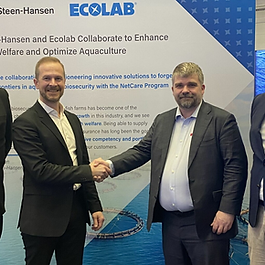
Bergen, 06.05.2024 A close collaboration that is pioneering innovative solutions to forge new frontiers in aquaculture biosecurity with the NetCare Program Steen-Hansen, a global market leader on antifouling and coating for aquaculture purposes, and Ecolab, a global sustainability leader offering water solutions and services, today announced the collaboration to further develop Steen-Hansen’s NetCare program to jointly address fish welfare through sustainable, innovative solutions, securing biosecurity in a broad aquacultural sector. Optimized aquaculture plays a vital role in meeting the world‘s food demand and is recognized as the fastest-growing food production system globally. As an alternative to sea overfishing, it offers a solution to combat the depletion of fish stocks, a key factor driving the current decline in ocean biodiversity. Aquaculture farming in the EU yielded 1.1 million tonnes of aquatic organisms in 2021, worth € 4.2 billion.1 Norway‘s production exceeds the total EU production in volume, and it is the ninth largest producer globally. In a collaborative effort, Steen-Hansen and Ecolab are pioneering advancements in aquaculture by improving fish health, reducing cross-contamination and enhancing the output of fish farms. The collaboration is honing the specification of net hygiene through their innovative NetCare program — a comprehensive framework that encompasses specialized training, rigorous procedures, and measurable results for the disinfection of aquaculture nets. Ecolab‘s innovative and aquaculturally approved products undergo thorough testing to help ensure they meet industry standards for material compatibility, practical functionality, and effectiveness. This helps promote the highest level of biosecurity and food safety, safeguarding against the rapid growth of biofouling which compromises net integrity and poses significant risks to the health of farmed fish populations. Steen-Hansen‘s cutting-edge NetCare certification program represents an important step to solidify an end-to-end hygienic process for the maintenance of fish farm nets. This robust regime of cleaning, disinfection, and coating is more than a procedure — it‘s a pivotal line of defense. It is instrumental in preventing the cross-contamination of pathogens between fish farms, a crucial step in averting potential mass fatalities within farmed fish communities. “Strengthening biosecurity measures for fish farms has become one of the most important challenges for sustainable growth in this industry, and we see the need for a holistic approach to improve fish welfare. Being able to supply compatible technologies, training and quality assurance has long been the goal for Steen-Hansen, and together with the extensive competency and portfolio of Ecolab we can fulfill an important solution for our customers.” , said Ulrik Ulriksen, CEO, Steen-Hansen. “Product stewardship is paramount to Ecolab in every aspect of our global operations. We strive to make a positive impact across our actions and products”  said Lars-Martin Haugberg, Head of Sales, Norway & Finland, Ecolab. “By collaborating with Steen-Hansen, which represents a holistic, steadfast approach to fish welfare, we help secure the stewardship further.” Steen-Hansen and Ecolab are committed to helping advance aquaculture practices that can not only enhance operational efficiency but also help promote the health and longevity of marine life. This collaboration aims at setting new industry benchmarks to deliver a controlled, effective, and sustainable model for to help safeguard against the proliferation of aquatic diseases.

Steen-Hansen and Ecolab collaborate to enhance fish welfare and optimize Aquaculture

Bergen, 06.05.2024 A close collaboration that is pioneering innovative solutions to forge new frontiers in aquaculture biosecurity with...

Read More
Many salmon farms use net cleaning to combat biofouling. Typically, the cleaning waste is directly discharged into the water where it poses a risk to fish health. Concerningly, this does not only affect the cleaned pen, but has the potential to impact neighbouring farms. You can read more about the dispersal of cleaning waste and the associated risks in this article by Nina Bloecher and Sintef: 
 https://www.sciencedirect.com/science/article/pii/S004896972402610X?via%3Dihub

Between-farm dispersal of biofouling waste from salmon pen net cleaning: Potential risks for fish health

Many salmon farms use net cleaning to combat biofouling. Typically, the cleaning waste is directly discharged into the water where it...

Read More
Bergen, 09.04.2024 Steen-Hansen is shifting into a higher gear and has hired Emiliano Pinori (51) to lead the company's development department. Emiliano is from Italy and holds a PhD in Chemistry and Molecular Biology from the University of Gothenburg. Over the past decade, he has led several research projects focused on materials for the marine sector on behalf of Sweden's research institute, RISE, where he has been involved as a business developer and senior scientist, among other things, in pioneering technology within low-emission biofouling prevention. "We are extremely proud to have Emiliano join our team. He brings a unique experience and a network that will be very useful; we aim to achieve our ambitious goals for sustainability and development for customers who have increasingly higher demands for the environment, animal welfare, and quality. Being able to recruit from the top shelf within research environments gives us the competence and drive we need to create good solutions for the future."  - says Ulrik Ulriksen, CEO of Steen-Hansen Group. Steen-Hansen has a state-of-the-art development laboratory, including a HALT lab (Highly Accelerated Lifetime Testing), where experimental testing and future products are emerging. The company has already made its mark as an innovation firm; being the first in the market with copper-free products for aquaculture, the first antifouling product approved in Europe under BPR, and the development of NetCare quality standards for net treatment are some of the most important milestones in recent years. Dr. Pinori will thus take on the responsibility and challenge of elevating the R&D work even further. "I am excited about the opportunity to work with the Steen-Hansen team, both in Norway and Chile. My first encounter with the company was back in 2014, while I was working on the LEAF project (Low Emission Antifouling). This led to a long collaboration where myself and RISE engaged in several of Steen-Hansen's projects, both as a problem solver and innovation partner. I am particularly looking forward to be working closely with Steen-Hansen's customers, the industry is forward-thinking and focused on finding good solutions. I believe many of the answers lie in a holistic approach to the environment, fish welfare, and clean nets, where preventative technology will be the first choice."  - says Emiliano Pinori, the incoming R&D Manager at Steen-Hansen.

Steen-Hansen strengthens focus on innovation and development

Bergen, 09.04.2024 Steen-Hansen is shifting into a higher gear and has hired Emiliano Pinori (51) to lead the company's development...

Read More
Following our rapid expansion and growth in  Chile  we are pleased to attract dedicated and hard working expertise.  Jaime León Rodríguez has assumed the position as "Jefe de Operasiones" for our Chilean team. Read more: https://www.salmonexpert.cl/antifouling-steen-hansen/nuevo-jefe-de-operaciones-y-desarrollo-se-une-a-steen-hansen-chile/1750203

Steen-Hansen AS welcomes new talent!

Following our rapid expansion and growth in Chile we are pleased to attract dedicated and hard working expertise. Jaime León Rodríguez...

Read More
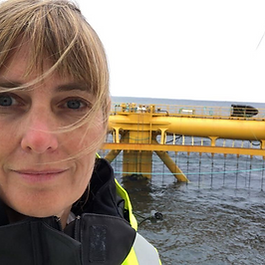
Authorities of Chile, Italy, and Finland announced that they have approved a range of Steen-Hansen products for use in aquaculture. Earlier this week, the respective authorities of Chile, Italy, and Finland announced that they have approved a range of Steen-Hansen products for use in aquaculture. The antifouling used on nets and other aquaculture equipment requires approval before it can be used in the aquaculture industry. Such approvals are necessary to ensure that the products are safe for the environment and for workers handling them. Directemar, the Directorate for the Navy and Maritime Activity in Chile, among other products issued approval for copper-free solutions based on Econea®. This makes Steen-Hansen the first and, for now, the only supplier with approved products without copper, thereby providing the Chilean aquaculture industry with a more environmentally friendly alternative. Italy and Finland are subject to the EU's regulation of approvals, "BPR", considered to be the strictest regime for safe use and documentation requirements. Nevertheless, national assessments by the countries' environmental authorities have been necessary since the products are used under different environmental conditions in different parts of the world. "Getting these approvals in place has been very important for us. Customers expect that antifouling is safe to use, both for fish and humans. Such external assessments by competent authorities are highly valued, costing us a lot of time and effort, but give Steen-Hansen the credibility we need in the market. We started using Econea®-based products already in 2017. Since then, documentation requirements have increased in line with popularity, and we can finally extend the use of these to Chile as well, which is one of the world's largest markets for antifouling for aquaculture."  – says Ulrik Ulriksen, CEO of Steen-Hansen.

Products approved for Chile and Finland

Authorities of Chile, Italy, and Finland announced that they have approved a range of Steen-Hansen products for use in aquaculture....
Read More
Marianne Halse has joined the Board of Directors of Steen-Hansen Group AS, bringing with her over 25 years of experience in fish health and animal welfare. Marianne currently serves as the Director of Biology and Fish Health at Salmar Aker Ocean, previously working as Fish health Director for Salmar and Marianne was one of the founders of the fish health company Åkerblå. Her involvement contributed to Åkerblå's growth into one of Norway’s leading institutions for biological consulting and environmental certification. Marianne also holds a Master's degree in Aquamedicine from UiT. "We are very pleased to have Marianne on our board of directors; her expertise and passionate commitment to fish welfare fit very well with the company's strategy. We find that the aquaculture industry is increasingly focusing on health challenges, and our contribution to knowledge, biosecurity, and biofouling prevention is very important to our customers. With her experience and biological understanding, Marianne will be able to challenge and guide us, which in turn creates improved solutions and hopefully even better animal welfare in fish farming,"  says Ulrik Ulriksen, CEO of Steen-Hansen. In 2023, Steen-Hansen launched a special focus programme on animal welfare and biosecurity. The effort to gather knowledge and share experiences has been led by Brit Hjeltnes, who, along with researchers, veterinarians, and breeders, engaged in dialogue to find best practices. Through the prevention of biofouling and minimal disruptive interventions, the fish were better equipped to handle other challenges. This work will continue in 2024 with new workshops and other activities.

Fish Health Expert joins the Board of Steen-Hansen

Marianne Halse has joined the Board of Directors of Steen-Hansen Group AS, bringing with her over 25 years of experience in fish health...

Read More
As part of the company's growth ambitions, Steen-Hansen has hired Alexander Frøyseth (39) as their new CFO – Chief Financial Officer. Alexander is from Bergen and graduated as a Business Economist with a master's degree in economics and administration from the Norwegian School of Economics (NHH) and the University of New South Wales, Australia. Alexander has a background in shipping, where he has worked as a Finance Manager for GC Rieber Shipping ASA. He has also worked with auditing for the consulting firm Deloitte "We are very pleased to have Alexander join our team. His experience from shipping brings in new and valuable expertise that will be put to good use; we are now aiming to achieve our ambitious goals for sustainability and development for customers who are increasingly demanding in terms of environment, animal welfare, and quality. The recruitment of highly qualified employees like Alexander shows that Steen-Hansen is an attractive workplace with employees who believe in what we are doing".  - says Ulrk Ulriksen, CEO of Steen-Hansen AS. Steen-Hansen has undergone significant changes recently, with a new, state-of-the-art factory in operation at the beginning of 2022, new owners with Accent Equity as the majority shareholder and a new portfolio of environmentally friendly products. The company also recently opened its own production facility in Chile. Strengthening the management team is a natural step in this development.

Steen-Hansen strengthens the team

As part of the company's growth ambitions, Steen-Hansen has hired Alexander Frøyseth (39) as their new CFO – Chief Financial Officer....

Read More
Contact

+47 55116260

bottom of page